Friday, February 24, 2012

Move over cookies and milk!

Make room for Super Peanut Buttery Chocolate Bars!


Sounds super unhealthy, right?!  When I think of a granola bar, I think: Health TRICK!  On the outside, it looks so yummy and so healthy with all of those oats and....umm, oats. That's the healthy part. The rest is typically JUNK!  Don't be fooled, and read your labels.  Not all granola bars are bad, but the ones that look tempting to your child may really be hiding some unwanted ingredients, like artificial stuff.

Get the kids involved in making their very own Granola bars, and likely you'll have a fun activity with a yummy reward at the end.  While we may not be saving a ton of overall calories, you can pronounce everything that's going into your little one's body, and they are getting a healthy dose of fiber.  I had a piece of my reward, and let me tell you, even for this pregnant girl with a bottomless pit for a stomach, a half of a serving was plenty to fill me up!

What you'll need:

Super Peanut Buttery Chocolate Bars:
* 2 1/4 cup rolled oats
* 1/4 cup wheat germ (you can get this at The Fresh Market for under $2/lb!)
* 1/3 cup brown sugar, unpacked
* 1/2 tsp sea salt
* 1 tsp cinnamon
* 1/2 cup dark chocolate chips
* 1/2 cup natural peanut butter
* 1 Tbsp grapeseed oil
* 1/4 cup unsweetened applesauce
* 2 eggs
(*Optional ingredients: dried fruits and nuts)

Preheat oven to 350 degrees. Coat a 9x9 inch pan with non stick spray. Mix together the oats, wheat germ, brown sugar, salt, and cinnamon in a large bowl. In another smaller bowl, mix well the rest of the ingredients. Stir the wet ingredients into the dry until well coated.  Press the mixture into the pan and bake for 25-30 minutes.  Cool completely in the refrigerator, then cut into 12 bars. Serve immediately or wrap in plastic wrap and store in the fridge for a week's worth of on-the-go snacking!


Dairy: serve with a cup of low fat milk (for those older kiddos)
Grain: whole rolled oats and wheat germ
Vegetable: n/a
Fruit: n/a (unless you add dried fruits)
Protein: natural peanut butter, eggs

When I thought about making granola bars, I was really discouraged by what looked like a tedious process. It actually was fast and easy!  While the nutritional contents of these bars vs a store-bought bar aren't vastly different (25 or so less calories, a gram or 2 less in fat, sugar, carbs), what's in them is.  Check out the ingredients list on the Quaker Peanut Butter Chocolate Chip granola bar (copied straight from their website):
GRANOLA (WHOLE GRAIN ROLLED OATS, BROWN SUGAR, CRISP RICE [RICE FLOUR, SUGAR, SALT, MALTED BARLEY EXTRACT], WHOLE GRAIN ROLLED WHEAT, SOYBEAN OIL, WHOLE WHEAT FLOUR, SODIUM BICARBONATE, SOY LECITHIN, CARAMEL COLOR, NONFAT DRY MILK), CORN SYRUP, BROWN RICE CRISP (WHOLE GRAIN BROWN RICE, SUGAR, MALTED BARLEY FLOUR, SALT), PEANUT BUTTER SPREAD (PEANUTS, SUGAR, PALM OIL, SALT), SEMISWEET CHOCOLATE CHIPS (SUGAR, CHOCOLATE LIQUOR, COCOA BUTTER, SOY LECITHIN, VANILLA EXTRACT), INVERT SUGAR, PEANUT FLAVORED CHIPS (SUGAR, PALM KERNEL AND PALM OIL, PARTIALLY DEFATTED PEANUT FLOUR, LACTOSE, DRY WHEY, DEXTROSE, CORN SYRUP SOLIDS, SOY LECITHIN, SALT, VANILLIN [ARTIFICIAL FLAVOR]), CORN SYRUP SOLIDS, GLYCERIN. CONTAINS 2% OR LESS OF CALCIUM CARBONATE, SORBITOL, SALT, WATER, NATURAL AND ARTIFICIAL FLAVOR, BHT (PRESERVATIVE), CITRIC ACID.
Our ingredients list: Rolled oats, wheat germ, brown sugar, chocolate chips (sugar, chocolate, cocoa butter, milk fat, soy lecithin, vanillin), peanut butter (peanuts), salt, apples, eggs, expeller pressed grapeseed oil.

So this was my starter kit for making homemade granola bars. I figured, if we don't like the peanut butter and chocolate ones, I'm sure to mess up the almond flaxseed ones.  So off on my next adventure to come up with some yummy, nutrient-packed granola bars for the adults (and some daring kiddos!)

Thoughts:
Cherry Dark Chocolate
Almond Flaxseed
Honey Nut 

Any other ideas?  I have all kinds of ingredients from dried cranberries and blueberries to almond butter and sunflower seeds. Time to get creative....

Wednesday, February 15, 2012

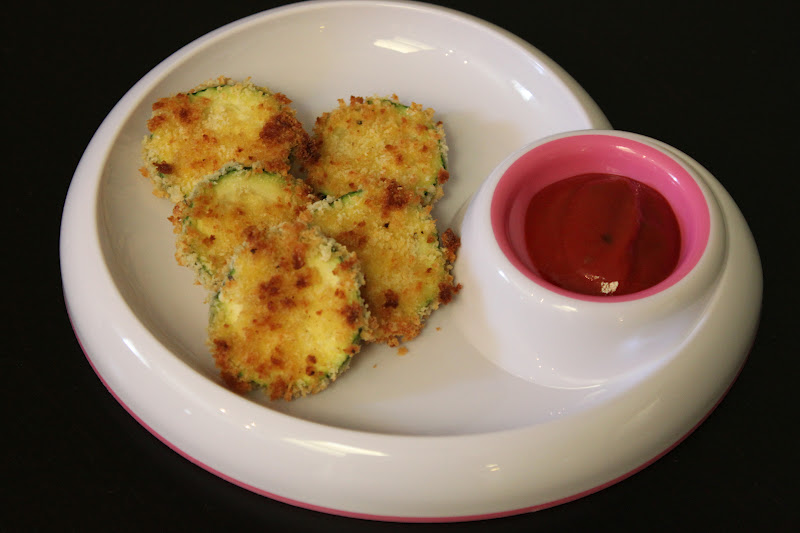
Zucchini Nuggets


Okay, so you won't be fooling your kids by saying they're having nuggets for dinner...they are obviously not chicken. But you may get away with sneaking some more veggies into dinner this way!  I have had some fun and success with my nephews (ages 6 and 4) when I serve sort of a themed meal, for example, the stick meal (carrot sticks, fish sticks, and a fruit kabob).  

Add zucchini nuggets as a side to your next chicken nuggets, and you've got a "nuggets" meal.

Zucchini Nuggets (Makes 4-5 servings of 4-5 pieces each)
1/2 Cup Whole Wheat Panko Crumbs
1/4 Cup grated Parmesan Cheese
1/2 Tsp Black Pepper
1/2 Tsp Garlic Powder
1 Egg White
1/4 Cup Flour
2 Medium Zucchini, cut into 1/4 inch coins
Optional: Pizza Sauce (posted on 2/14/12) for dipping

Preheat oven to 450 degrees and coat a large baking sheet with cooking spray. Mix together Panko crumbs, parmesan cheese, pepper, and garlic powder and set bowl aside. Whisk egg white and set bowl aside. Pour 1/4 cup flour into another bowl and set aside. Dip zucchini pieces into flour, then egg white, then coat with crumb mixture and place on prepared baking sheet. Spray tops of nuggets with olive oil, and bake on 450 for about 7-8 minutes. Then, turn nuggets over for another 5 minutes.
*If you want, cut zucchini length wise instead of into "coin" shapes if you're going for "stick" night! Also, these aren't bad cold! Toss a few in the lunch box the next day!

As a nutritionist, I am not too fond of adding calories to a basically "free" food such as zucchini. However, these are packed with zucchini flavor, with a crunchy outside and juicy inside. So, for little mouths whose taste buds are still learning, this is a great way to introduce the flavor of the vegetable without missing out on flavors to which they may have already grown accustomed. There is minimal flour in the coating, and using an egg white instead of the whole egg will only add about 15 calories and 3 grams of protein per serving. Panko bread crumbs are a crunchy alternative to regular bread crumbs, and you are saving about 20-40 calories per serving (depending on brand).

This is a great food to keep in your freezer, too. Just make an extra batch and store in a freezer bag. When you take them out to bake them, just add 3-5 extra minutes. You can get the kids involved as well: Ask them which shape they would like to eat; Have them crack the egg into the bowl (they have to learn sometime!); Set up an assembly line for them so they can do all the dipping. 

Tuesday, February 14, 2012

Sweetheart Mini Pizzas


Simple. Quick. Tasty. Sneaking-veggies-into-their-diet. Yes, please!

Here's a go-to meal I love to have ready for my toddler, and it works well for bigger kids (and even us BIGGER kids when we just want something quick)!

It's a twist on the old English Muffin pizzas I ate as a kid.

One day when you are making spaghetti sauce or have a few extra minutes, go ahead and make some pizza sauce to store in the fridge or freezer:

Mix together the following:
1 - 6 oz can tomato paste
6 oz water (just fill the empty paste can)
2 Tablespoons of your favorite Italian seasonings mixed (I use equal parts dried oregano, parsley and basil--add yours to taste)
1 teaspoon sugar

To store in the freezer, just pour into a Ziploc freezer bag and seal out all the air. It should last a few weeks. If you want this just for mini pizzas, store in portioned snack baggies for easier thawing.  You don't want to thaw and refreeze the sauce.  And, I wouldn't store it in the fridge longer than a week.

For the pizzas:

1 Whole Wheat English Muffin
2-3 Tablespoons homemade pizza sauce
2 Tablespoons chopped fresh spinach
1 Tablespoon finely chopped broccoli florets
1/3 cup Low Moisture, Part-Skim Mozzarella Cheese

Preheat the broiler in your oven. Split English muffins and place on cookie sheet. Top with pizza sauce and vegetables, and warm in the oven for a few minutes (2-5 depending on how quickly your oven heated up).  This helps the veggies cook and soak into the sauce.  Then add cheese and broil until cheese is melted.  Yields 1 serving.  Serve with a side of fresh fruit cocktail.

Today I made these pizzas in the shape of a heart in celebration of Valentine's Day. Just use a cookie cutter to cut the English Muffin before you add toppings.  What to do with the leftover bread that I cut off?  That's going in tonight's meatballs....a favorite meal of the hubby's.

Other kid-friendly ideas to improve your pizza:
Finely shredded zucchini
Chopped mushrooms
Fresh sliced tomatoes
Whole wheat mini-bagels
Whole wheat pita bread
Chopped turkey sausage (sweet Italian isn't too spicy for kids, but check sodium content!)


Dairy: 1/3 cup Low Moisture, Part-Skim Mozzarella Cheese
Grain: Whole Wheat English Muffin
Vegetable: Pizza Sauce with added veggies
Fruit: 1/2 cup fresh fruit cocktail- blueberries, peaches, grapes
Protein: no meat, but cheese provides a bit of protein

**This meal looks like it would be loaded with sodium. And yes, it is a tad higher than other meals I would typically like to serve. Using the brands I had in my kitchen today, a full serving of this English muffin mini pizza would provide about 400 mg Sodium total because of the cheese and muffin (tomato paste was minimal).  If your child typically snacks on fresh fruits and vegetables instead of crackers or other packaged foods, a little extra sodium at meal time is okay!  

Wednesday, February 8, 2012

The Toddler Cup of All Toddler Cups.....

Whenever I pass an aisle of toddler feeding items, I stop and look. I'm always in the market for new tricks of the trade...

We've been trying to get my daughter, now 15 months, off of the bottle for some time. I quit cold turkey for 3 days, but she just refuses milk in anything other than her bottle. After getting a cup thrown at my face too many times, I gave up and decided to give her more time. But running through Walmart the other day, I saw this new cup by Avent.  There's no sipping device, so they don't have to suck.  They can sip from all around the cup.  There is a lock position for travel, but while she has the cup, she has to be sitting and supervised.  I started with water, which she likes to drink from anything--straw, sippy, bottle, cup.  She learned this new cup in less than a day, and so I did it. I put MILK in it. And she CHUGGED IT!!!!

Thanks for celebrating with me!!  We'll see how long this lasts. But here is the cup if you are interested in trying it out!

http://www.usa.philips.com/c/avent-baby-toddler-feeding/260ml-12m-plus-scf782_13/prd/en/

And while I have your attention about toddler feeding items, check out these cute things I picked up (also at Walmart!) a few weeks back.  I just had to support my Food Guide Plate!

A portioned and separated plate for the food groups, and a plastic place mat displaying the groups

Veggie Tales--Frozen? Fresh?


For the longest time I loved filling up my grocery cart with fresh fruits and vegetables. I spent more time in the produce section than any other and it just felt good to unload all of those healthy, colorful, leafy, fresh items onto the belt.

And then I had a baby.

Spending the time to find the freshest of the freshest, the least bruised, and the brightest colored produce, (and then bringing it home to watch half of it go bad in my fridge) was agonizing with a child in tow, and didn't really help my efforts to decrease our living expenses while I quit working.  You know you're guilty too...you had the best intentions of preparing that enormous head of cauliflower you picked up, but each night you swear you're going to find a good recipe and cook up that cauliflower TOMORROW! Next thing you know, it's sittin' in your refrigerator drawer, brown as can be.

I am a huge supporter of pre-planning your meals for one week to avoid such waste in your refrigerator, but I too find myself at the grocery store on occasion without a specific plan in place.  Instead of filling up my cart with fresh vegetables, in this case, I reach for the freezer.

Frozen produce is just as good as, if not better than, fresh!  What?  As a fruit or vegetable ripens, the content of its nutrients changes.  Produce that is chosen for freezer packaging is picked at it's peak ripeness (when nutrient content is at its best). They then blanch the food, which does cause leakage of some of the water soluble nutrients, like vitamin C and B vitamins, but flash freezing them then locks in the remaining high content of other nutrients.

Fresh produce, picked at its peak ripeness from your back yard (or bought at the local farmers' market in season), will result in the highest nutrient content available from that fruit or vegetable.  But off-season, we buy produce that's been picked before it is ripened (not reaching its full potential) and then shipped long distances and set in an aisle---all the while losing even more nutritional value.

Not all fruits and veggies are good frozen so we still buy the obvious things like apples, bananas, oranges, grapes, and carrots fresh. They are still a great alternative snack to high calorie items, even if they have lost some nutrients in the winter.

Here's a great list of veggies you can keep in your freezer for easy addition to meals:
*Peas
*Corn
*Carrots
*Broccoli
*Stir Fry mixes
*Asparagus
*Peppers
*Spinach
*Brussel Sprouts
*Cauliflower
*Lima Beans
*Green Beans

How to cook frozen veggies? Steaming is best, but sometimes in a skillet meal, you can just add them in toward the end and they will thaw and cook without getting mushy.

And you can't go wrong with bags of frozen berries!  Add them to your morning oatmeal or make a quick smoothie by blending with yogurt and a splash of 100% juice.

A word of caution:
Frozen produce is a great alternative to fresh if and only if the bag of frozen produce is just that...a bag of frozen produce. Read the label!  Anything with a sauce, or those 'meal in a bag' deals, has added preservatives, sodium, flavor, and sometimes color enhancers.  Think about it, if the food was picked at its peak ripeness and flash frozen, it actually is the color nature intended it to be!

Canned? I'm not even going there. The canning process leaches nutrients and adds sodium! Use sparingly!

I've mentioned Wildtree before, but my sister just informed me that many of their all natural blends can be tossed with frozen veggies in a Ziplock bag, and stored in the freezer until meal time that week. You can have flavored, healthy veggies as a great addition to pasta, rice, cous cous, quinoa, or just as a tasty side dish. Send me a message if you're interested in learning more about Wildtree, or visit her page:
www.courtneymcgregor.mywildtree.com

Thursday, January 26, 2012

Where's my organic milk?!


While shopping at the commissary yesterday, in desperate need of milk for my house, I came to the dairy section with a screaming child. Nap time. Oh boy, I've done it again. I've lost track of time, picking out the best looking produce, reading all of the labels on my organic meats, scrutinizing over every ingredient in the snacks I've chosen for my nephews who are visiting for a few days. My toddler's had enough, but I haven't even gotten around to her favorites, dairy!  I buy the same things every time so I can rush through this section like it's the back of my hand. At the end of the dairy, as I made my way to my last stop at the breads, I realized I just skipped the milk, a key ingredient to my child's happiness.  I raced back over and thought I was losing my mind. Where in the heck is my organic milk?!

"Due to shortages in production, we will be temporarily out of organic milk," the sign placed smack in the middle of a completely empty refrigerator read.  The entire organic selection, gone!  Who's taking my milk?!  

I was frustrated. Mostly because my kid was screaming, but frustrated too that I would have to make yet ANOTHER stop on the way home, totally negating my efforts to save money by shopping on base. (Sometimes I go a little crazy. Sure we could survive off of one half gallon of the "other" milk until we could get out to another store, but again, I'm crazy).  I did smile a little knowing that the word is out, we need more organic dairy farms to keep up with the demand....the demand to provide healthy options!!

I did a little research and found that the entire east coast is experiencing this shortage, not just my local commissary (as I also found the shortage at Food Lion and Target). The problem is as the demand for organic milk increased toward the end of 2011, so did the cost of the organic feed that farmers buy for their cows. The problem was that the price of the milk stayed the same.  Farmers had to adjust by feeding their cows less, and not buying more cows to keep up.  

So, the next thing we will see is a hike in the price of organic milk (some say up to $1 more per gallon!), and then we will start to see our grocer's refrigerators full of the stuff.  When I did find some, I bought as many as they had. Sorry fellow concerned consumers who are looking for organic milk at the Target at Monticello, I am sure this will all be over soon. I'm hoping before February 26, when my current stock expires.

This brings me to a very valid concern that people ask me all the time: "Why is it so expensive to eat healthy?"  Many people say cost is a big factor when choosing foods for their family. We are very much a reactive society vs a preventative one, and one that needs instant gratification.  Today I may see that I am only spending $5 on a full and satisfying meal that's ready instantly, but if I continue to do that, I will see thousands of dollars in health care costs down the line.  Eating healthy, and spending the little extra money and effort to do so, pays off over time.  I'll be posting shortly how to stretch a buck with healthy snacks and meals. Stay tuned friends!

Sunday, January 22, 2012

2 Be Organic, or Not 2 Be....

That is the question of this century!

best-eggs.jpg


Here are my 2 cents....

To live a 100% organic life, including all household products and foods, is near impossible. Not impossible, but nearly. You have to be very disciplined, simple, and actually, rich.

When it comes to the foods you put in your body, and your child's, you want to consider a few things when choosing between organic and non-organic products. The FDA still does not regulate labeling as well as it could for the everyday consumer, so be smart when reading labels and choosing foods. The USDA has very specific guidelines on what Organic actually means.

If a food is labeled organic it means that 95% of that food is the following (if it says 100% Organic, then all of the food is the following):
Animals are not given antibiotics or growth hormones, and produce is grown without the use of conventional pesticides, fertilizers made of synthetic ingredients, bioengineering or ionizing radiation.


So, 2 Be Organic:
-Any fruits or vegetables that you are going to serve WITH the skin on (think about the pesticides on the outside of the skin)
-Milk, Eggs*, and Meats (think of the hormones given to the animal producing, plus the pesticides on the feed that they give these animals!)

Organic eating can get pricey, so choose your battles! I don't always buy organic fruits and veggies because my daughter can't chew the skins yet anyway, so I spend the extra on the milk, eggs, and some of the meats. It is a process, but you can always start somewhere!


*Another note about eggs:  Cage free. It is not a perfect system, but it's better than caged. The more I research my food, the more I want to either go vegan or start my own cruelty-free farm......ugghhh. Neither are going to happen, so you will hear me say frequently, choose your battles!